Somewhere in the 40s, a lot of men start noticing small things: workouts take longer to recover from, afternoons feel heavier, and stamina that used to be automatic now takes some intention. None of that means something is wrong — it usually means it's time to be more deliberate about the habits that support energy and circulation, rather than assuming they'll take care of themselves.
This guide breaks down what typically shifts after 40, and the natural levers that make the biggest practical difference — before we talk about where a formulated gummy like HoneyFil can fit into that picture.
What "vitality" actually means
"Vitality" gets used loosely in marketing, but it's really a bundle of a few connected things: how much usable energy you have, how well blood moves through your body, how much physical stamina and endurance you can call on, and how all of that ties into sexual wellness. These aren't separate systems — circulation affects energy, energy affects stamina, and stress affects all three.
What commonly changes after 40
Recovery from exercise or poor sleep can take a bit longer. Muscle mass and strength require more deliberate maintenance through resistance training. Cardiovascular efficiency and circulation benefit more from consistent activity than they did in your 20s. None of this is a diagnosis — it's a general pattern, and it varies enormously from person to person based on genetics, activity history, and overall health.
Five natural levers worth pulling first
1. Prioritize sleep consistency
Energy is built overnight, not during the day. A consistent sleep and wake time — even on weekends — tends to matter more than total hours alone for how energetic you feel.
2. Keep resistance training in the rotation
Strength training supports muscle maintenance, metabolic health, and — indirectly — circulation, since more muscle mass means more capillary demand and better blood flow distribution.
3. Eat with protein and micronutrients in mind
Adequate protein supports muscle maintenance, while a diet rich in colorful vegetables supports the antioxidant and micronutrient intake tied to healthy circulation.
4. Build in stress management
Chronic stress affects everything from sleep quality to blood pressure. Even short daily practices — a walk, breathing exercises, time outdoors — add up.
5. Support circulation specifically
Circulation deserves its own line item. Movement, hydration, and nitrate-rich foods (like leafy greens and beets) all play a role. If you want the deeper science on how this works, see our guide on how nitric oxide affects circulation and male performance.
Want the ingredient-level detail? We break down one of the most studied circulation-support amino acids in L-citrulline benefits for men.
Where a supplement like HoneyFil fits in
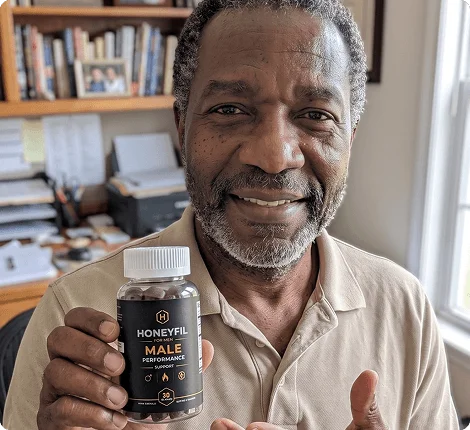
HoneyFil is built around eight nutrients and botanical extracts — including L-citrulline, L-carnitine, zinc, vitamin B3, maca root, and pine bark extract — organized around circulation, energy, stamina, endurance, and vitality. It's designed as a daily gummy that complements the habits above, not a replacement for them. A supplement can support the foundation; it can't build it alone.
Setting a realistic timeline
Vitality-focused changes — whether from lifestyle habits or a daily supplement — tend to show up gradually over weeks, not overnight. For a practical day-by-day framework, see our daily habits guide for energy and circulation.
Frequently asked questions
Does vitality naturally decline after 40?
Many men notice gradual shifts in energy, recovery, and stamina starting in their 40s. The pace and degree vary widely and depend heavily on sleep, activity level, nutrition, and stress — not age alone.
What's the single most impactful habit for male vitality?
There isn't one silver bullet, but consistent sleep and regular resistance-based movement are two of the highest-leverage habits, since both influence energy, circulation, and stress hormones simultaneously.
Can supplements help with vitality after 40?
Nutritional and botanical supplements, like those found in HoneyFil, are designed to complement lifestyle habits rather than replace them. They work best as one part of a broader, consistent routine. If you're comparing products, our buyer's guide walks through what to look for.